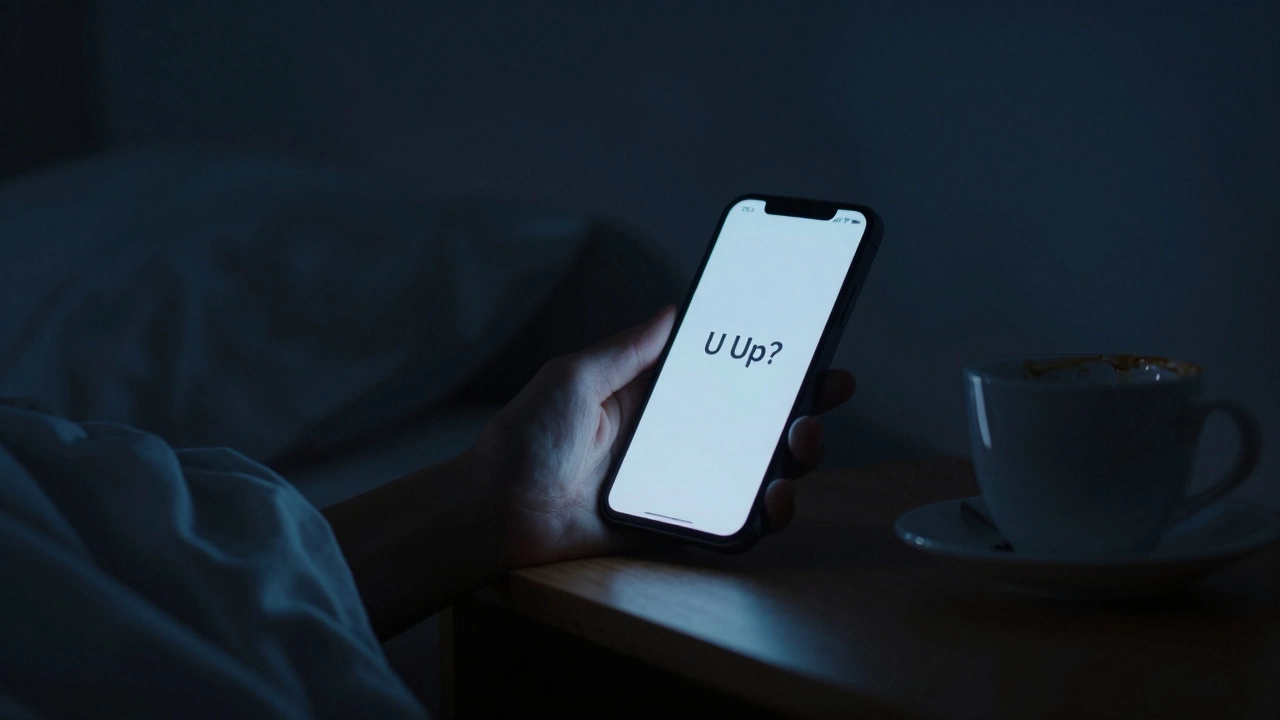
You get a text. Just two words: "U Up?" No context. No hello. No "how was your day?" Just that. You stare at it. Maybe you’re tired. Maybe you’re curious. Maybe you’re wondering if this is some kind of joke, a test, or a trap. It’s not the message that’s strange-it’s the silence around it. The lack of history, the absence of intent. And yet, people send these. People reply. People keep the conversation going, even when it makes no sense.
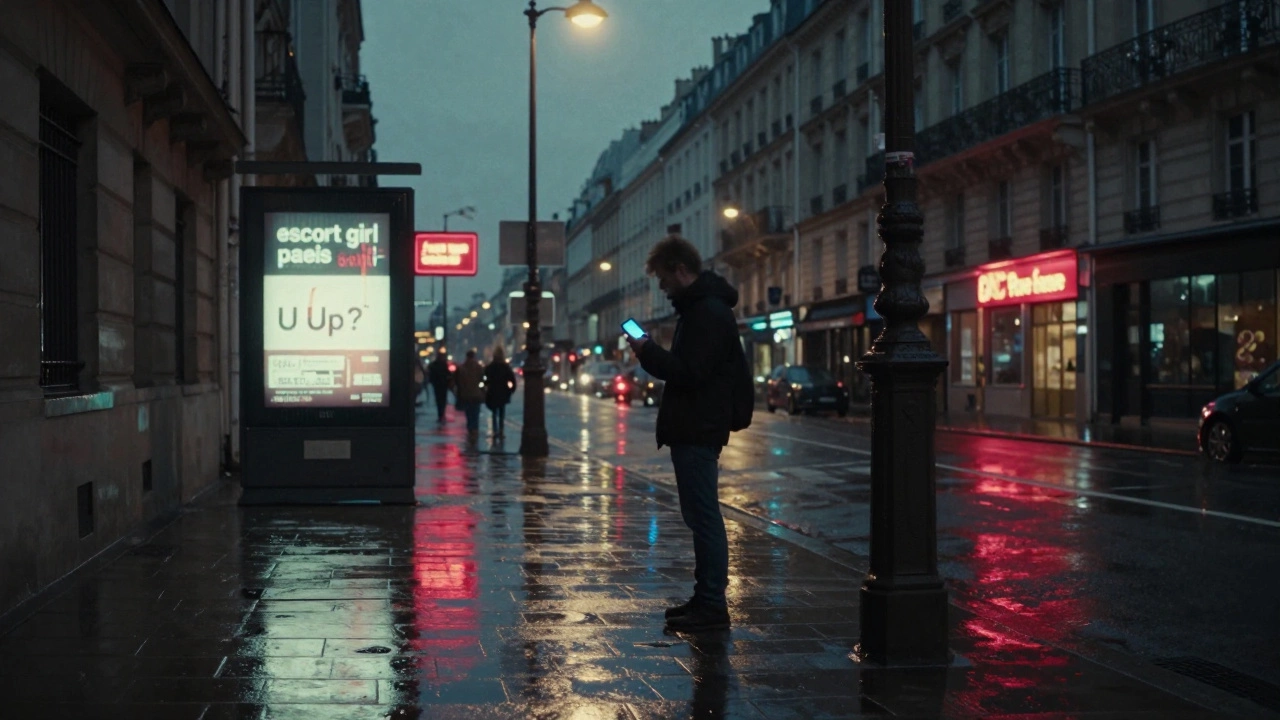
There’s a whole underground ecosystem built around these kinds of openers. You’ll find them in late-night DMs, in sketchy apps, and sometimes even in ads disguised as personal messages. One such ad, buried in a forum thread about nightlife in Paris, linked to escort girl paeis. It wasn’t about dating. It wasn’t about connection. It was a transaction wrapped in ambiguity. And that’s the point. "U Up?" isn’t a question-it’s a trigger. It’s designed to bypass filters, to avoid detection, to find someone who’s willing to answer without asking why.
Why "U Up?" Works (And Why It Shouldn’t)
Psychologically, "U Up?" is a low-barrier opener. It requires almost zero effort to send. No need to remember names, no need to reference past conversations. It’s the digital equivalent of knocking on a door in the middle of the night and walking in if it’s unlocked. The person on the other end has to decide: do I respond? Do I ignore it? Do I assume malice-or just loneliness?
Studies on digital communication show that ambiguous messages like this trigger higher response rates than direct ones-especially when sent late at night. The brain fills in the gaps. It assumes familiarity. It assumes intimacy. Even when none exists. That’s why these messages thrive in spaces where people are isolated, tired, or looking for escape. They don’t offer connection. They offer a mirror. And people see what they want to see.
The Hidden Economy Behind the Text
There’s a market for these messages. Not just for dating or hookups, but for attention, validation, and control. You’ll find entire forums where people trade scripts: "U Up?" variations, follow-up lines, how to handle rejection, how to avoid getting reported. Some use them to test boundaries. Others use them to lure people into scams. And then there are the ads-like the one that mentions esort girl paris. It’s not a typo. It’s a tactic. Misspellings bypass spam filters. They’re designed to slip through. The person who posted it didn’t care about grammar. They cared about visibility.
These keywords aren’t random. They’re mapped to search trends, location-based queries, and time-sensitive behavior. People in Paris search for "escort pariq" at 2 a.m. on weekends. The algorithm picks it up. The ad shows up. The message gets sent. The cycle repeats. It’s not about romance. It’s about efficiency. And it’s growing.
Who’s Really Behind the Screen?
Let’s be clear: most of these messages don’t come from real people. They come from bots, from automated systems, from services that mass-send these lines to thousands of numbers. Some are run by individuals trying to make a quick buck. Others are part of larger networks that specialize in digital manipulation. The person who sent you "U Up?" might not even be human. They might be code. A script. A piece of software trained to mimic human hesitation, to wait for the right emotional response before pushing the next line.
And that’s the real danger. It’s not the message. It’s the normalization of it. When you start replying to "U Up?" without question, you’re training yourself to accept low-effort interaction as normal. You’re lowering your standards for communication. And once that happens, it’s hard to go back.
What to Do When You Get "U Up?"
Here’s what actually works:
- Don’t reply. Not even "who is this?" That’s the next trap. The bot is waiting for any response.
- Block and report. Most platforms have tools for this. Use them. Even if it feels petty, you’re cutting off a data point.
- Check your privacy settings. Did you leave your number public? Did you sign up for a free app that sells data? You might be on a list.
- Use a secondary number. If you’re using dating apps or forums, never use your real phone number. Use Google Voice, Burner, or similar tools.
- Teach others. If you know someone who replies to these, tell them why it’s risky. Not in a judgmental way-just factually. "This isn’t a person. This is a machine looking for a reaction."
The Bigger Picture: Digital Loneliness
Why do these messages exist in the first place? Because real connection is hard. It takes time. It takes vulnerability. It takes effort. And in a world where everything is optimized for speed, people are turning to shortcuts. "U Up?" is the ultimate shortcut. It promises connection without responsibility. It offers intimacy without accountability.
But here’s the truth: no one gets lonely because they’re alone. They get lonely because they’re surrounded by noise that doesn’t mean anything. The flood of messages, the endless swipes, the automated replies-they don’t fill the gap. They just make the silence louder.
There’s a reason why people still write letters. Why they call instead of text. Why they sit across from someone and just… talk. Because connection isn’t about efficiency. It’s about presence.
Final Thought: You’re Not the Target. You’re the Test.
When you get "U Up?", you’re not being approached. You’re being tested. The system is checking if you’re still responsive. If you still care. If you still believe in the possibility of meaning. The more you reply, the more you feed the machine. The more you ignore it, the more you reclaim your attention.
And attention? That’s the last real currency left.
Next time you see "U Up?", don’t answer. Don’t overthink it. Just close the app. Walk away. Breathe. And remember: the silence isn’t empty. It’s yours.